The Classic Everest Base Camp Trek
-Guide-Arjun-at-Everest-B.C.2-1790930561.jpg)
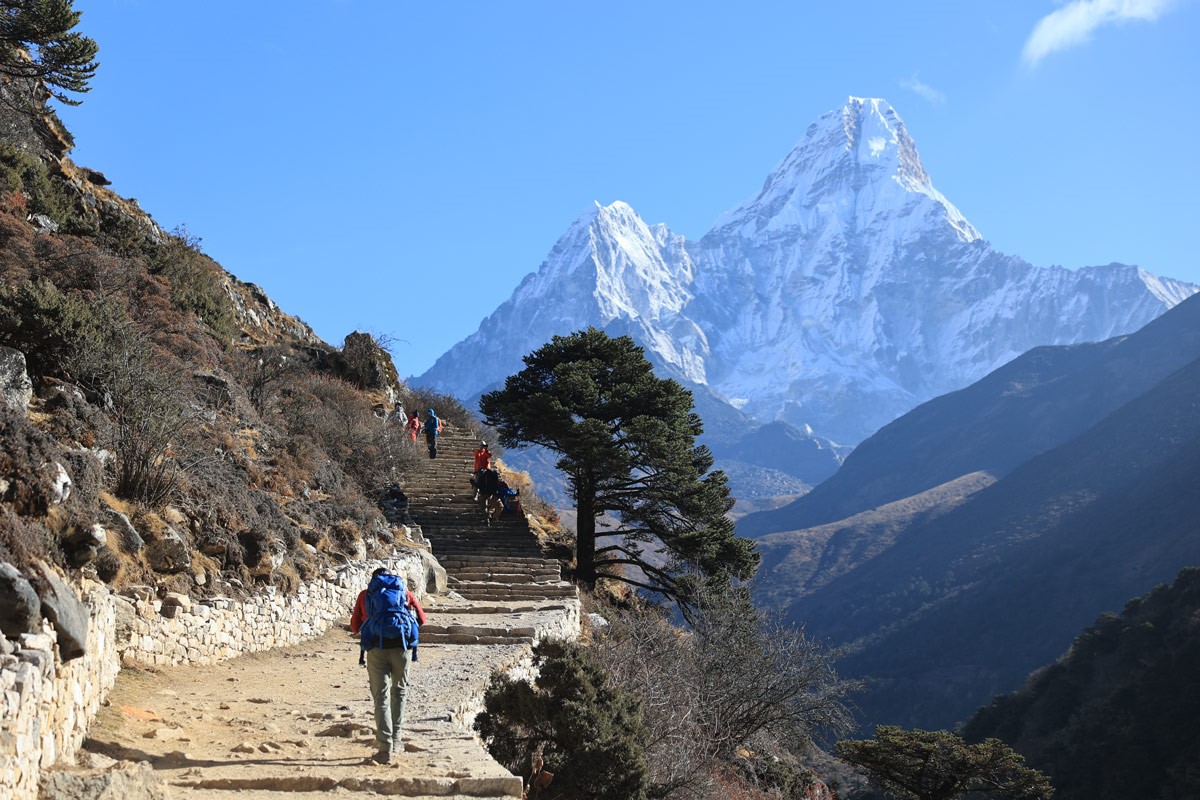


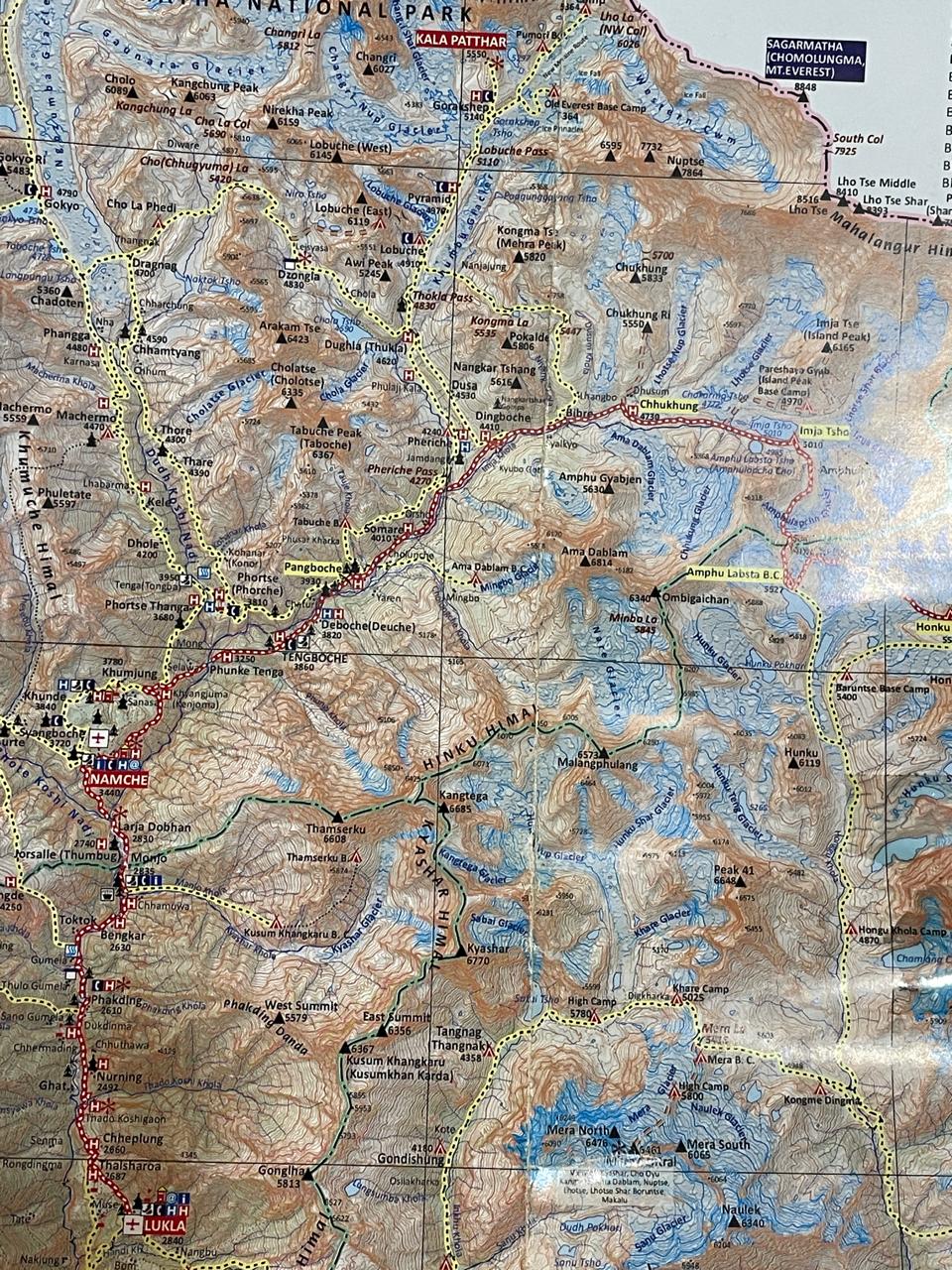
This trek takes you to the heart of the Himalayas and Sherpa land. While it is a bit strenuous, it is worthwhile, offering vibrant Sherpa culture amidst towering mountains and colorful monasteries. Starting from Namche Bazaar, the route leads to Thyangboche, then further to Dingboche and Gorakshep, culminating at Kala Patthar for the classic view of Mt. Everest. Mingling with aspiring summiteers and their experienced Sherpa climbers will create unforgettable moments that you will cherish forever.
It is an opportunity to embark on the same epic journey that Sir Edmund Hillary and Tenzing Norgay set off on in 1953. Nothing beats the thrill and sense of accomplishment that comes with seeing the power and grace of mighty Everest up close.
🌄 ✨ Highlights of the Everest Base Camp Trek
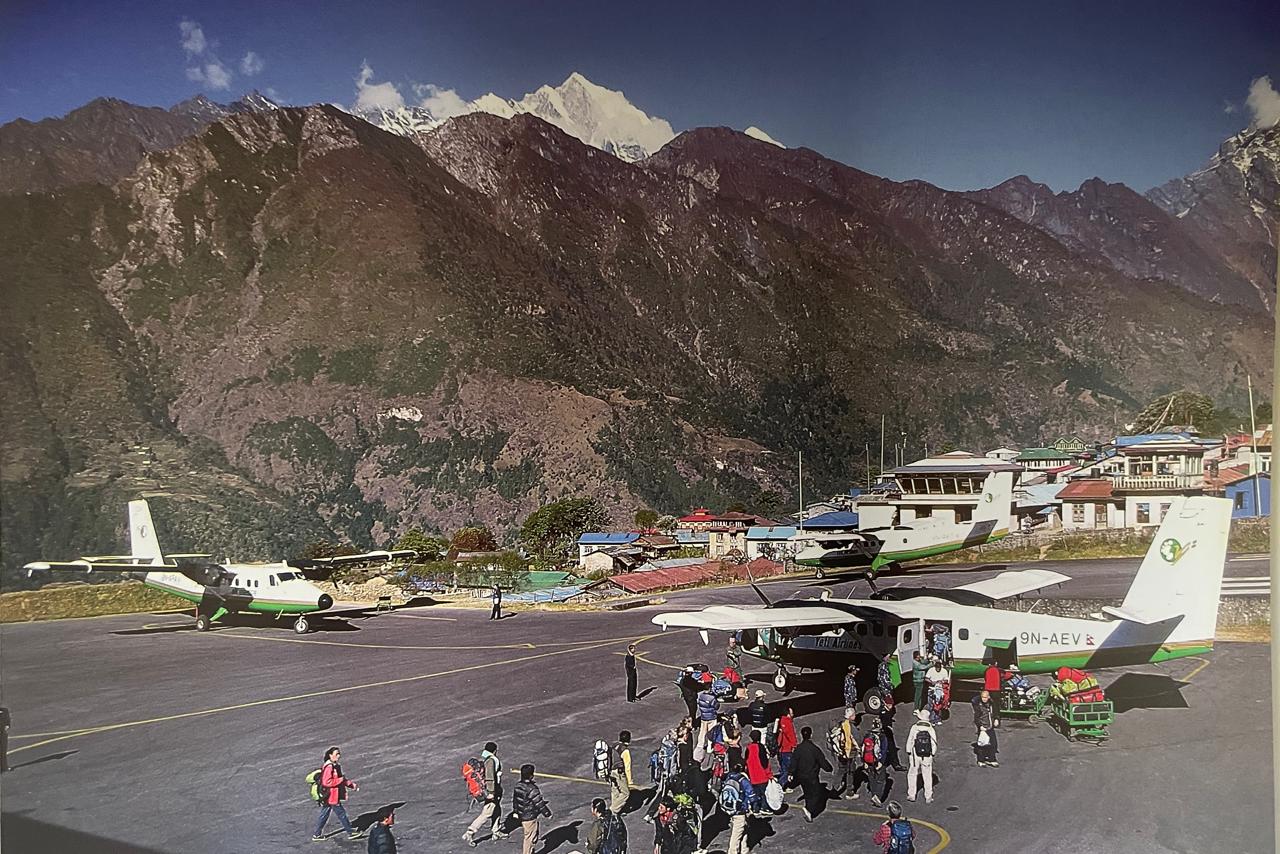
- Scenic flight to Lukla: A thrilling 17-minute flight from Manthali to Lukla, the gateway to the Khumbu Valley.
- Sherpa culture immersion: Visits to traditional villages, homes, and monasteries that showcase the vibrant Sherpa way of life.
- Sagarmatha National Park: Trekking through a UNESCO World Heritage Site rich in biodiversity and Himalayan landscapes.
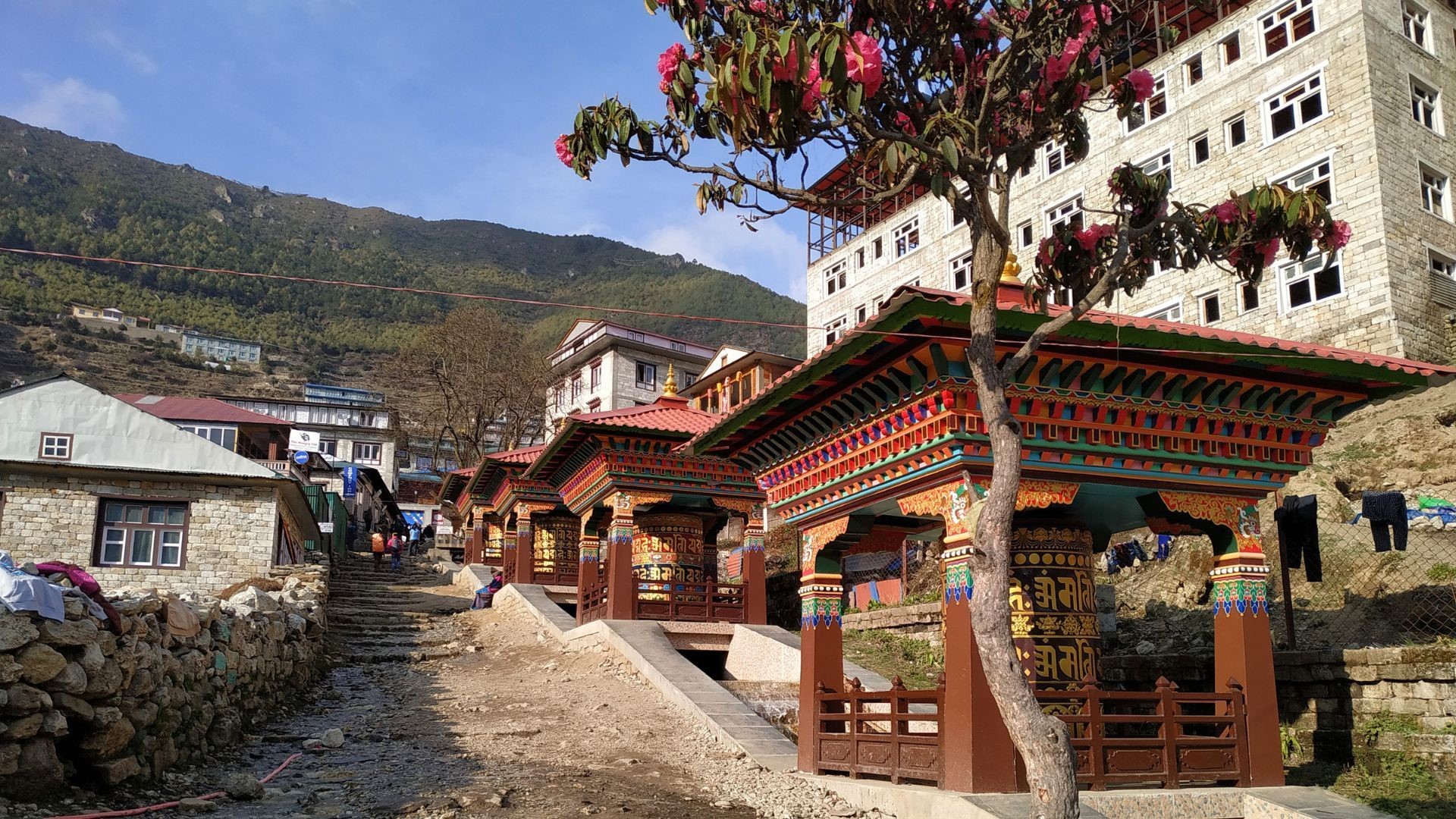
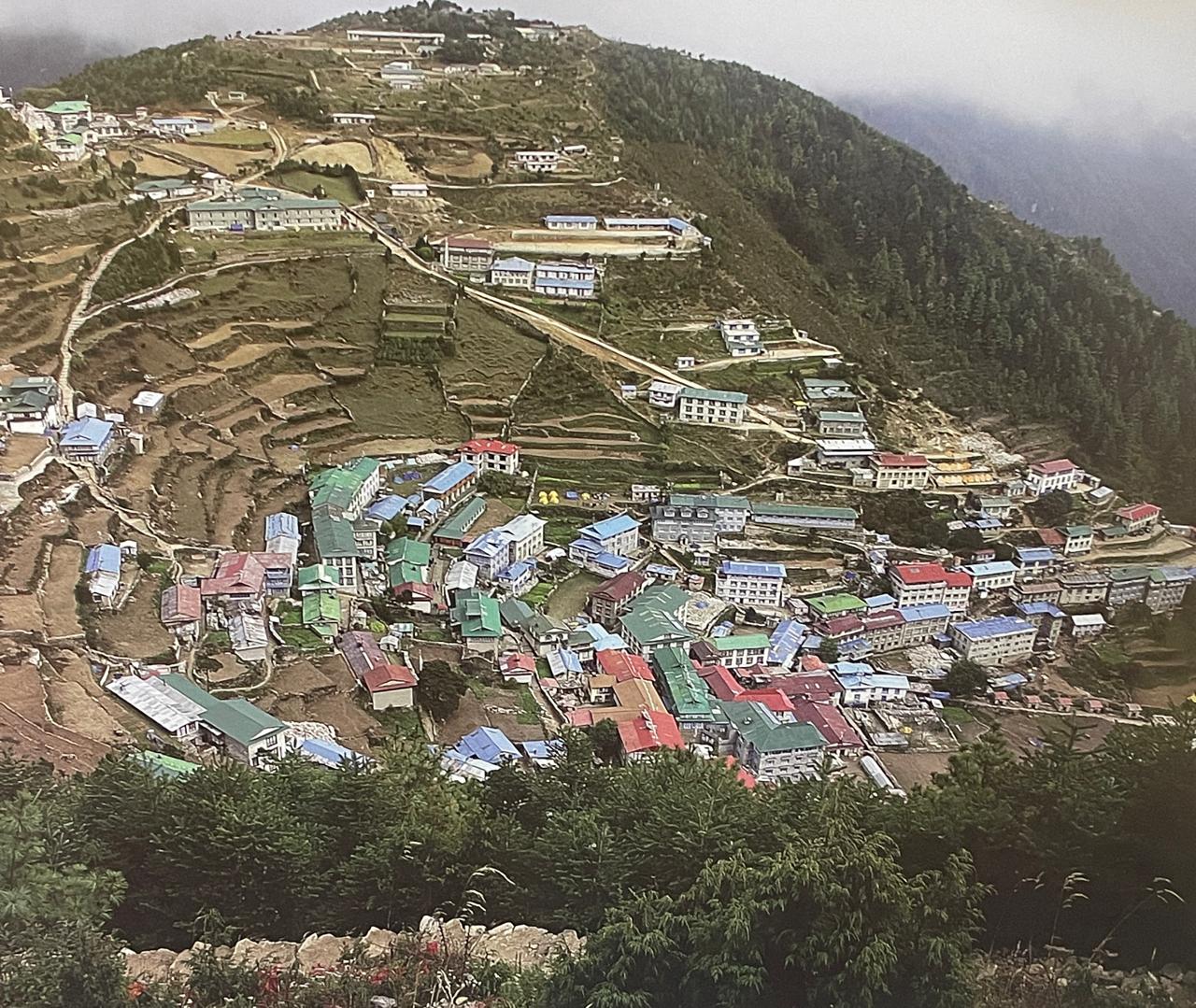
- Namche Bazaar: The bustling Sherpa capital, a hub of trade, culture, and acclimatization.
- Tengboche Monastery: Spiritual heart of the Khumbu, surrounded by panoramic mountain views.
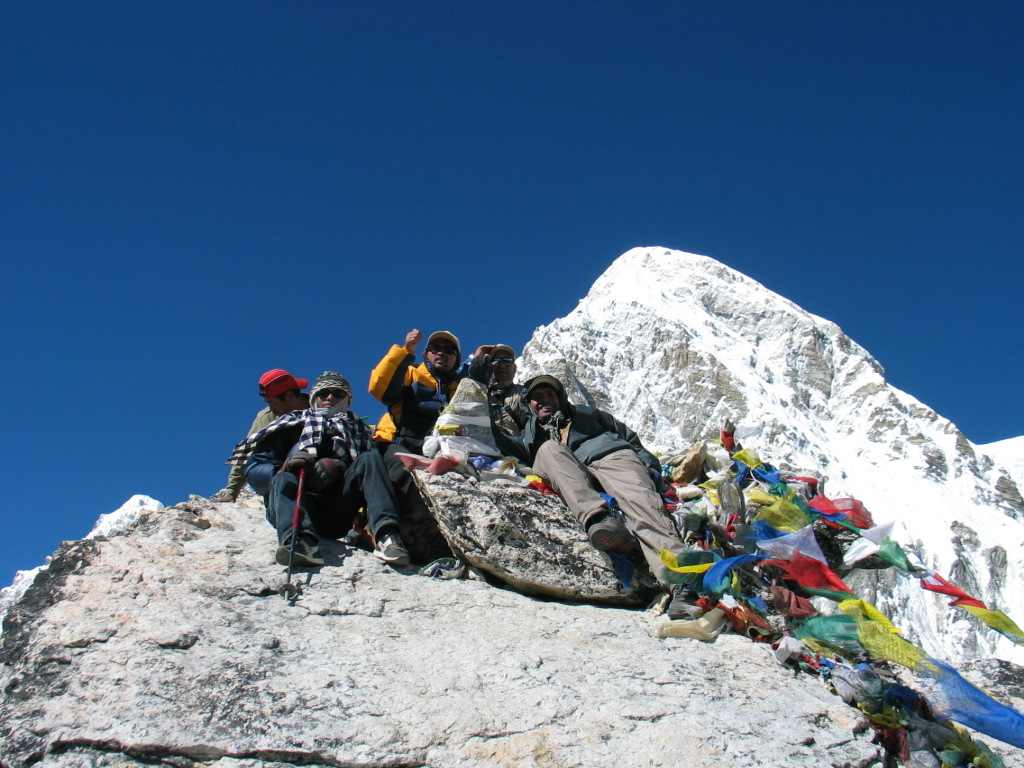
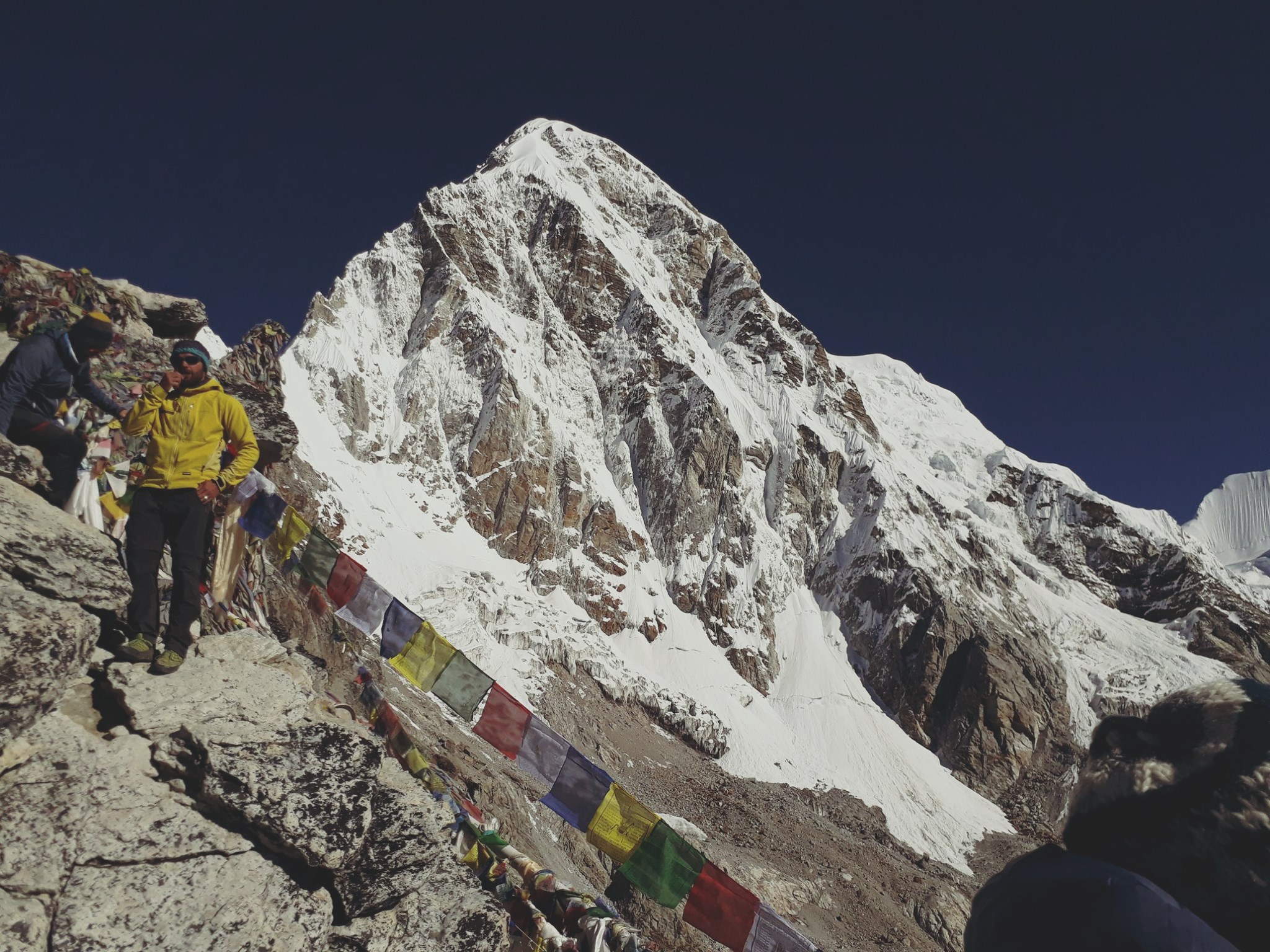
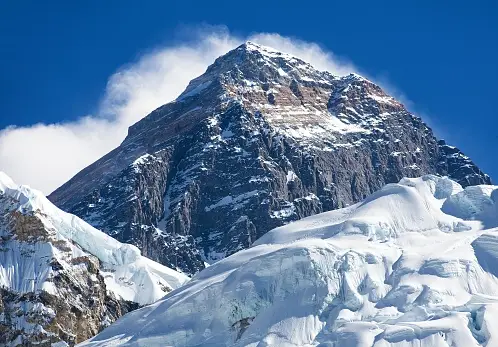
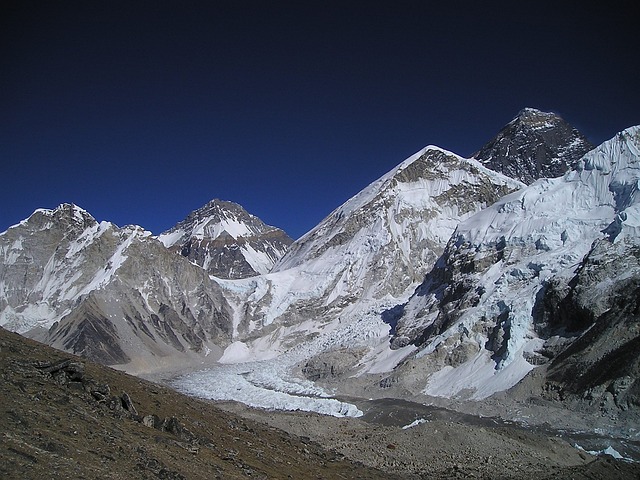
- Kalapatthar viewpoint: The ultimate vantage point for breathtaking panoramas of Everest (8,848 m) and surrounding peaks like Lhotse, Nuptse, Ama Dablam, and Pumori.
- Himalayan vistas: Constant views of iconic peaks including Island Peak, Khumbutse, Lingtren, Changri, and Lobuche.
🌄✅ In essence: The Everest Base Camp trek is “the grand tour of the Khumbu Valley” — a physically demanding yet profoundly rewarding journey. It blends adventure, culture, and spirituality, offering trekkers both world-class mountain panoramas and an intimate look into the Sherpa lifestyle. From the thrill of flying into Lukla to standing atop Kalapatthar with Everest before you, this trek is a once-in-a-lifetime experience that captures the very soul of the Himalayas.-Guide-Arjun-at-Everest-B.C.-1790930371.jpg)
Itinerary
Arrival and transfer to Hotel. Free day. Overnight in Kathmandu.
Upon your arrival at Tribhuvan International Airport in Kathmandu, you will be met by our staff and transferred to your Hotel. In the evening you guide will be introduced to you and a briefing session will be conducted about your trek. A free evening.
Optional Kathmandu Valley sightseeing Tour.
If you opt for it, we can organise a guided "walking tour" of Kathmandu Valley UNESCO Heritage sites: old bazaars and Durbar Squares of Patan and Bhaktapur, stupas and Temples for cultural discoveries of ancient temples and religious shrines of the three medieval kingdoms.
Drive to Manthali (nearest airport from Kathmandu). Flight to Lukla. Trek to Phakding (2610 m)
Early morning drive from Kathmandu to Manthali (if getting up at wee hours is troublesome, we can travel to Manthali the evening before and spend the night here). The flight takes about 16 minutes to Lukla. The trek starts downhill to Phakding, a distance of 6.2 km, and an elevation of 2,610 meters. Phakding, at a lower elevation, will help with acclimatization as well. The trail is easy, mostly downhill and then flat all the way along the Dudhkoshi River. You have the option of visiting a small monastery there and enjoying some glimpses of the Sherpa culture. Overnight in a local lodge in Phakding village.
Phakding to Namche (3440 m)
The distance from Phakding to Namche Bazaar is 4.4 km, and the duration is about 4 to 5 hours with 830 m elevation gain. From Larja Dobhan, the uphill steep climb reaches Namche Bazaar. The higher suspension bridge over the Dudh Koshi River is used to reach Namche Bazaar. Between Larja and Namche, you will have your first glimpse of Mount Everest.
The trek offers amazing scenery of towering mountains of the Sagarmatha National Park while winding through traditional Sherpa settlements such as Phakding, Toktok, Bankar, Manjo, Jorsalle, and Namche Bazaar. Each village reflects the warmth of Sherpa hospitality, with prayer flags, mani stones, and suspension bridges adding to the adventure. After a rewarding day’s walk, you’ll arrive at Namche Bazaar, the bustling hub of the Khumbu region. Known as the “Sherpa capital,” Namche is a lively town with colorful markets, cozy lodges, and panoramic views of Thamserku and Kongde Ri. Overnight at a hotel in Namche Bazaar.
An acclimatization day in Namche Bazaar (3440 m)
Acclimatization is absolutely important before proceeding to higher elevations. So this is the first of two specific acclimatization days that everyone should build into their trek schedule. You can spend the day by taking a day hike to a higher elevation to Thami village, or visiting Khunde or Khumjung to explore the region and the monasteries, schools, etc., or by relaxing and exploring Namche Bazaar. The logic is to acclimatize your body well to the high elevation by "trek high and sleep low". Overnight at the hotel.
Namche to Tengboche (3837 m)
There is a direct route from Namche Bazaar to Tengboche that starts at Chhorkung, winds around the hill to the tea and souvenir shops of Kenjoma, and joins the trail from Khumjung just before Sanasa. Leaving Namche, the trail contours high above the Dudh Koshi River, offering panoramic views of Everest, Lhotse, and Ama Dablam. The path passes through pine and rhododendron forests, dotted with prayer flags and small chortens, before gradually descending to Phunki Tenga.
From here, a steady climb leads to the wide meadow of Tengboche (3,867 m), home to the renowned Tengboche Monastery, the spiritual heart of the Khumbu. The monastery is surrounded by breathtaking Himalayan vistas, making this one of the most memorable stops on the journey. Tengboche Monastery is the heart of the religious activities of the Sherpa people of the Khumbu region. Overnight at local lodges.
Tengboche to Dingboche (4350 m)
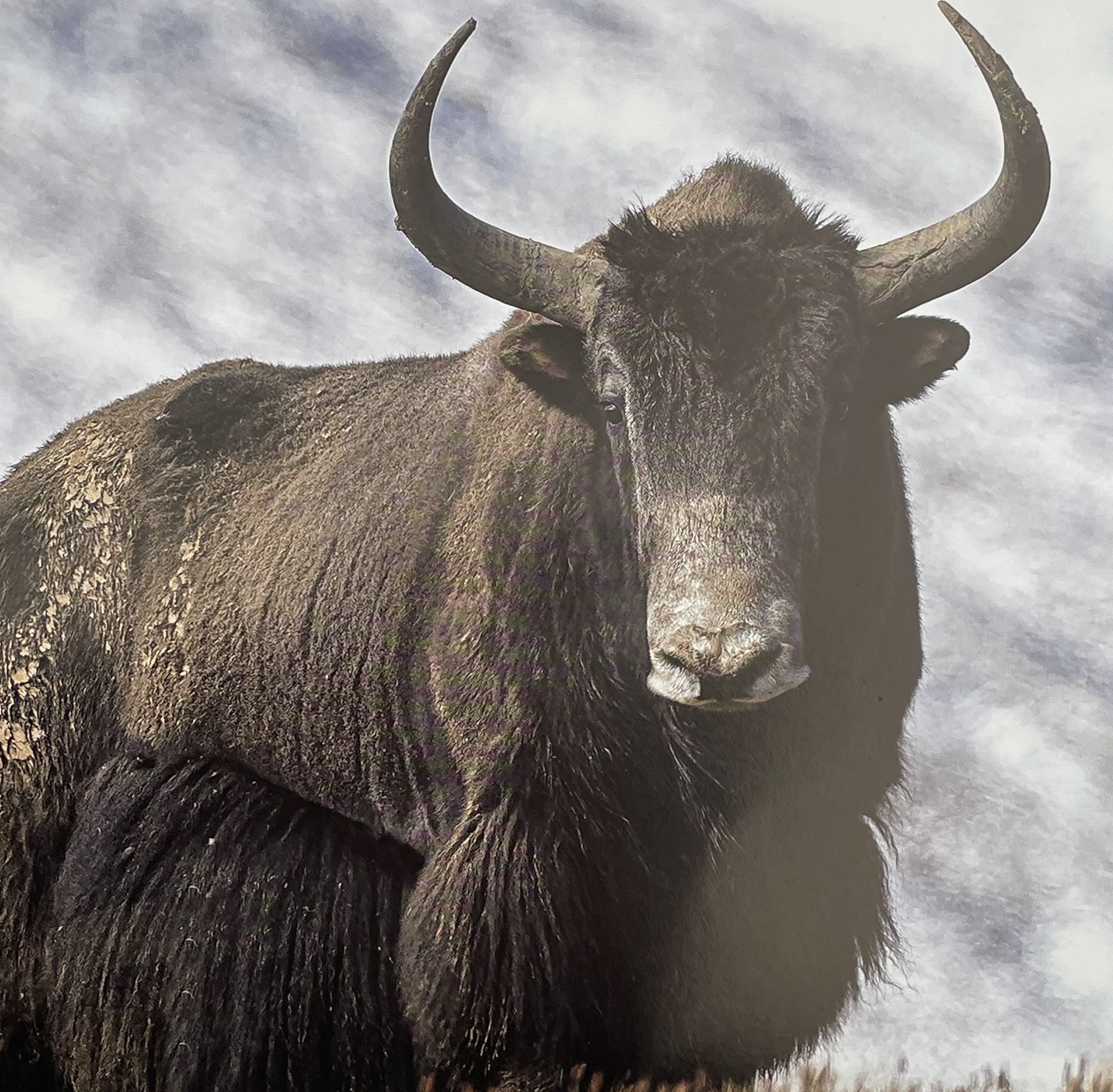
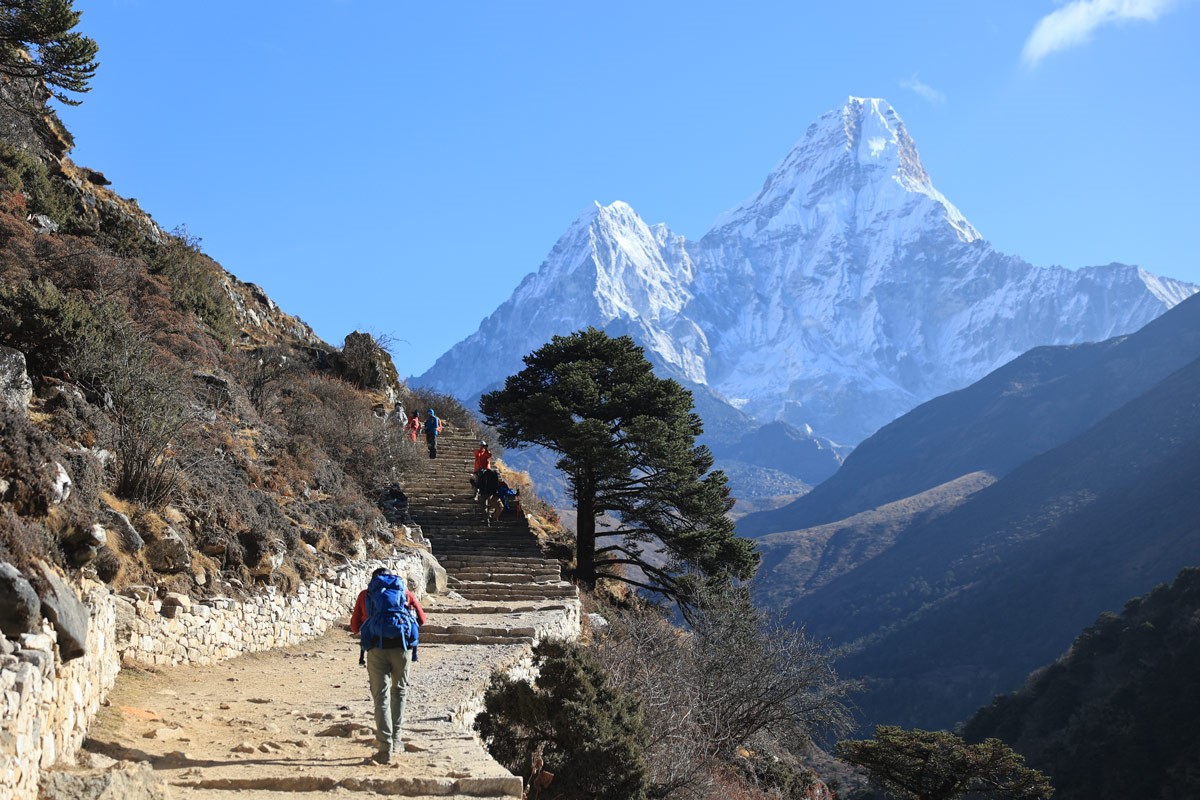
Beyond Tengboche, the landscape enters the steppes where the altitude starts to increase beyond the 4,000m mark. The trail descends through rhododendron and pine forests to Debuche, before crossing the Imja Khola on a suspension bridge. From here, the path climbs steadily past Pangboche, the highest permanent Sherpa settlement, with stunning views of Ama Dablam dominating the skyline. The landscape gradually opens into alpine meadows and stone-walled fields protecting the crops of barley and potatoes from the cold winds. It is occupied mainly during the monsoon months, when large numbers of yaks are brought here to graze in the valley pastures as you approach Dingboche (4,410 m), a picturesque village nestled in a broad valley beneath towering peaks. The views are fantastic in this valley: the towering south face of Lhotse to the north, Island Peak in the centre, and the fluted ice walls of unnamed peaks that line the southern end of the valley. Overnight at local lodges.
An acclimatization day in Dingboche (4350 m)
This is your second acclimatization day to help your body tune in to the higher altitude in the coming days, which is absolutely necessary, and you can opt for a short excursion up the valley. You can enjoy short hikes to nearby viewpoints such as Nagarjun Hill or Chhukung Valley, which provide spectacular panoramas of Ama Dablam, Lhotse, and Island Peak. These gentle walks aid acclimatization while offering a chance to explore the high-altitude landscape of stone-walled fields, alpine meadows, and traditional Sherpa homes. The village itself is a serene place to relax, interact with locals, and soak in the dramatic scenery of the Imja Valley. Overnight at local lodges.
Dingboche to Lobuche (4620 m)
The trail gradually ascends from Dingboche through alpine pastures and yak-grazing areas, with the scenery becoming more rugged and dramatic. Passing through Dughla (Thukla) at 4620m, trekkers climb a steep section adorned with memorials to climbers who lost their lives on Everest. From here, the path continues along the lateral moraine of the Khumbu Glacier, offering striking views of Pumori, Nuptse, and other towering peaks. The day’s journey ends at Lobuche (4,910 m), a small settlement nestled among the high mountains. Overnight at local lodges.
Lobuche to Everest Base Camp (5364 m) and overnight at Gorakshep (5170 m).
The trail is pretty easy to start with other than the fact we will be height almost at 5000 m. We start early in the morning to gradually ascend, following the Khumbu Glacier up the valley to Lobuche Pass, then follow a steep section through a series of rocky and icy ups and downs. As the sun begins to rise, its rays quickly warm you up, allowing you to move a bit more freely when taking on the next rocky scramble. Walk to Everest Base Camp, visit the base camp area, and walk down a short descent that will bring you to Gorakshep (5170 m), which is the last village before the Base Camp and your highest altitude sleeping point of the trek. Visit the Everest Base Camp, explore the famous Khumbu Icefall, try to make the most mingling with the aspiring summiteers and the legends of the Everest. We retrace our way back to Ghorakshep for the night.
Visit Kalapatthar and trek back to Lobuche (4930 m)/Pheriche (4252 m)
Another early morning start to climb Kalapatthar ( 5545 m), the highest point of this trip, for the best views of the south face of Everest, Lhotse, Nuptse, and a host of other Himalayan giants. Retrace your steps back to Lobuche. On the way, you'll pass through Lobuche and Thukla again. You'll also cross the Thokla Pass. Here, the path splits, and you'll take the way to Pheriche. As you go down, you'll notice the dramatic changes in the landscape and the climate.
Pheriche to Tengboche (3837 m)
Today, you'll trek from Pheriche to Tengboche. Even though you'll pass through some of the same settlements as before, it's still fun to see them again. The familiar route still offers breathtaking landscapes, from lush forests to rocky high-altitude terrain. You'll walk through beautiful rhododendron forests. The path also takes you over hanging suspension bridges above the fast-flowing Dudh Koshi River. You can see lovely waterfalls from these bridges. As the trek progresses, you come across several traditional Sherpa settlements of Somare, Pangboche, Deboche, and Tengboche. Overnight at a local lodge.
Tengboche to Namche (3440 m)
The walk from Tengboche to Namche is relatively straightforward and takes around 5-6 hours. There is a monastery at Thamo and Sherpa villages in between. Overnight at the hotel.
Namche to Lukla (2860 m)
Today is the last day of your trek. You will trek the steep descent from Namche and back to the suspension bridges over the Dudh Koshi and into the small village of Monjo. From Monjo, the trail now flattens out and you will cross the river twice more before starting up the hillside, past numerous teahouses to Lukla. Overnight in a hotel.
Flight to Manthali and drive to Kathmandu. Hotel in Kathmandu.
We board our early flight from Lukla to Manthali. Lukla-Manthali is about a 17-minute flight. From Manthali, we will drive about 5 hours to Kathmandu. Overnight in Kathmandu.
A buffer day
This day is set aside just in case the weather in Lukla affects the flight operations in and out of Lukla. This day can be used to explore the back streets, or you can have a walk around the local market to hunt for some last-minute souvenir pick-ups. Overnight hotel.
Departure transfer to onward journey
Photo Gallery
Map
Map of Everest Region