Guided Sightseeing Tours of UNESCO WORLD HERITAGE SITES


For those short on time in Kathmandu or have a few days in hand before or after other trips, this convenient sightseeing tour is perfect. Accompanied by a professional guide, you'll visit many of the Kathmandu Valley's must-see highlights, including UNESCO World Heritage Sites like Swayambhunath Temple and the Durbar Squares of Patan, Bhaktapur, and Kathmandu. Additionally, you'll explore the sacred Pashupatinath Temple and the impressive Boudhanath Stupa.
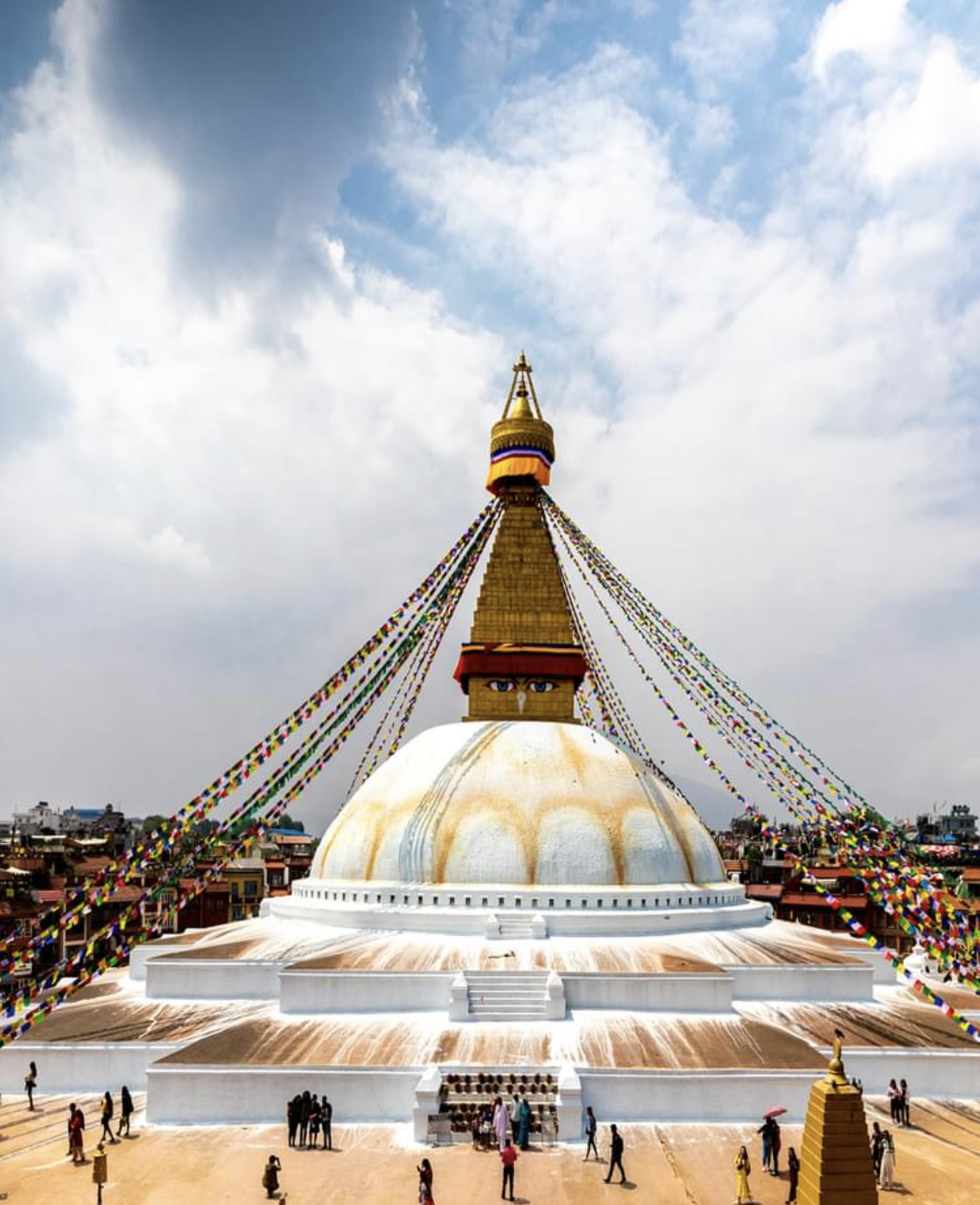
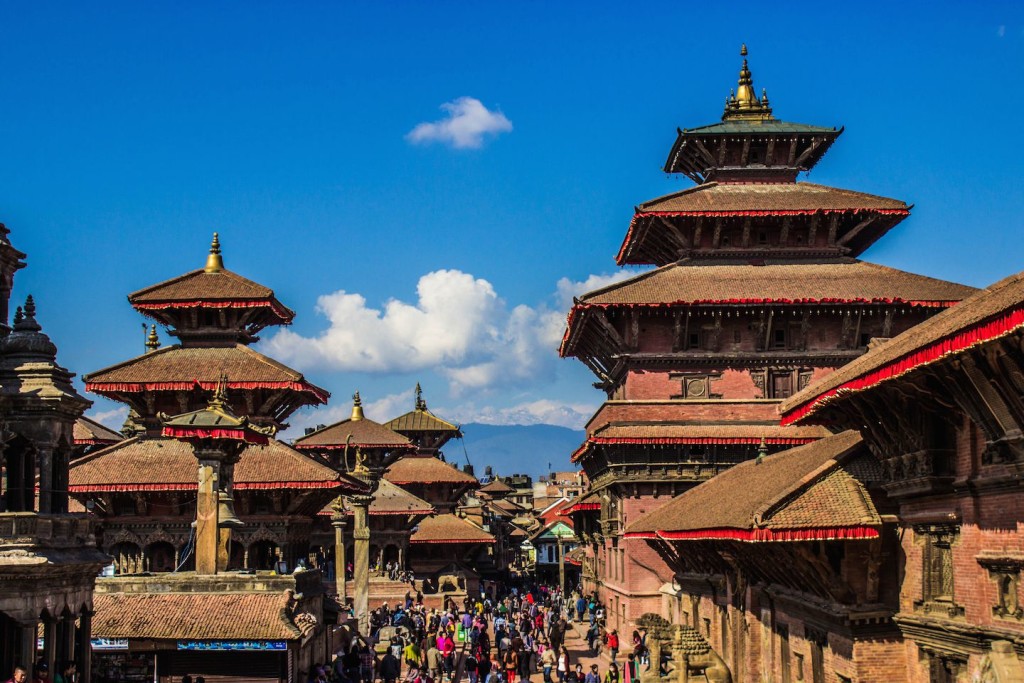
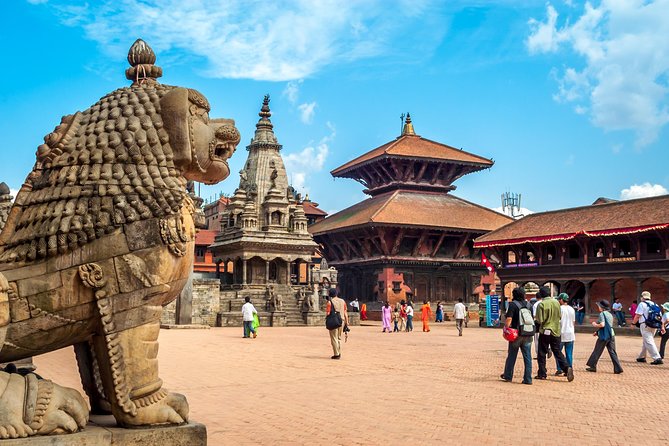
The Durbar Squares are culturally significant plazas located opposite ancient royal palaces, filled with historic temples, idols, open courts, water fountains, and much more. Boudhanath is among the oldest and largest stupas in the world, surrounded by Tibetan antique shops and a Tibetan monastery. Swayambhunath, perched on a hillock overlooking the valley, features the iconic all-seeing eyes of The Buddha and is adorned with large Buddhist statues and chortens. Pashupatinath is the most revered temple for Hindus, attracting devotees from around the globe.
Why take the the hassle of hailing taxis in this busy city—this guided tour offers comfortable transportation to all major attractions. A typical half-day tour, lasting about 3 hours, includes visits to Patan Durbar Square and Swayambhunath Temple, or Pashupatinath Temple and Boudhanath Stupa, or a tour of the ancient city of Bhaktapur. A full-day tour covers almost all the key sites, providing a comprehensive exploration of Kathmandu's rich cultural heritage.
Itinerary
1. Swayambhunath Stupa:
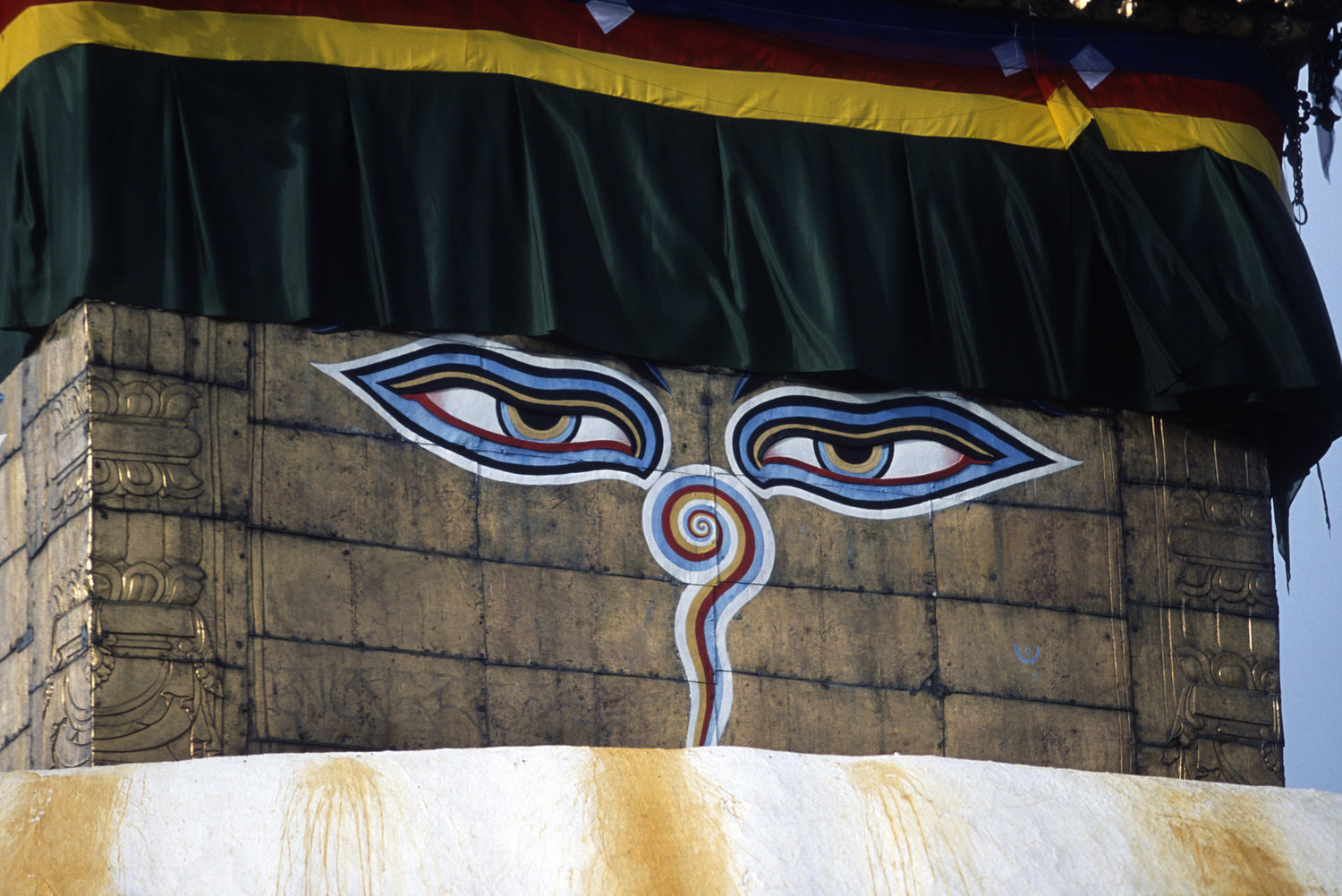
Represents a typical Buddhist architecture - is one of the world’s most glorious, ancient, and enigmatic - the holiest of Buddhist Chaityas that dates back more than 2000 years - a mosaic of small stupas and pagoda temple contributed by and time by the succession of kings and noblemen. The main structure is made of a solid hemisphere of brick and clay, supporting a lofty conical spire capped by a pinnacle of copper gilt, with painted on the four sides on the base of the spire are the “All-Seeing Eyes” of Lord Buddha. Playful monkeys live here, and the temple also offers a panoramic view of the capital.
2. Boudhanath Stupa:
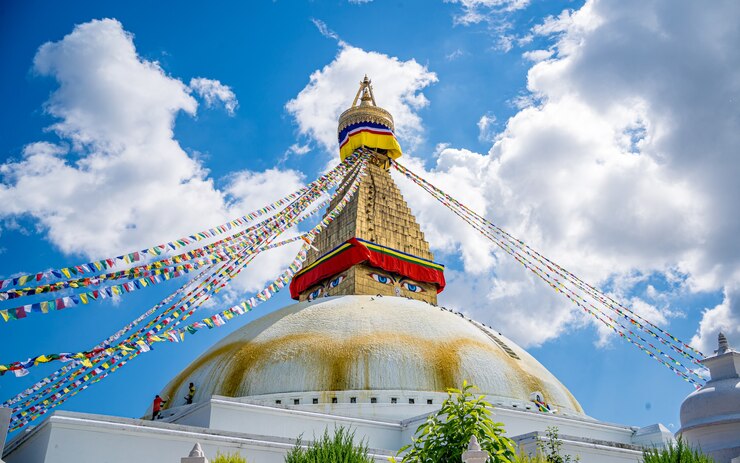
Built in the 5th century A. D. The site is a Mecca for Tibetan Buddhists, and every year tens of thousands of pilgrims from all over the Himalayan region visit the stupa. This colossal and ancient Stupa, one of Nepal’s most unique monuments and said to be the world's biggest, attracts Nepalese pilgrims of Tibetan stock from faraway lands as well as Tibet, Ladakh in India, and Bhutan.
Baudhanath Stupa, with all-seeing eyes of primordial Adi Buddha on all four sides of the stupa, is said to hold the remains of Kasyapa - the Buddha of the previous time. The stupa, 100 meters in diameter, built on an octagonal base inset with prayer wheels by the Lichchavi King Mana Deva in the fifth century, rises to 36 meters above the base; including the spire, “all-seeing eyes,” and the pinnacle represent the stages of enlightenment, a symbol of royalty, compassion, knowing, and nirvana. There are many myths about the origins of the stupa.
3. Patan Durbar Square:
Located in the heart of Lalitpur city in Nepal, it is a stunning example of Newar architecture and cultural heritage. This UNESCO World Heritage Site is a mesmerizing assembly of ancient palaces, courtyards, and temples, showcasing intricate wood and stone carvings. The square served as the royal palace for the Malla kings of Lalitpur and is home to several iconic structures, including the Krishna Mandir, built entirely of stone, and the Golden Temple, a revered Buddhist monastery. The vibrant ambiance, surrounded by bustling markets and the echoes of traditional rituals, offers a glimpse into the rich artistic and spiritual history of Nepal. The Patan Museum displays artifacts that narrate the historical and artistic journey of the region. The square is also a venue for various festivals and events that bring it to life with music, dance, and colorful ceremonies, leaving a lasting impression of Nepal's glorious past and vibrant culture.
4. Kathmandu Durbar Square:
Also known as Hanuman Dhoka Durbar, it used to be the residence of the Nepali royal family and administrators. This ancient palace lies in the heart of the city. It consists of a huge Royal Palace with several temples, inside and outside the temple, dating from the 15th to the 18th century. This palace is named after Hanuman, the monkey god, as a stone statue of Hanuman is placed right next to the main entrance, protecting the whole palace.
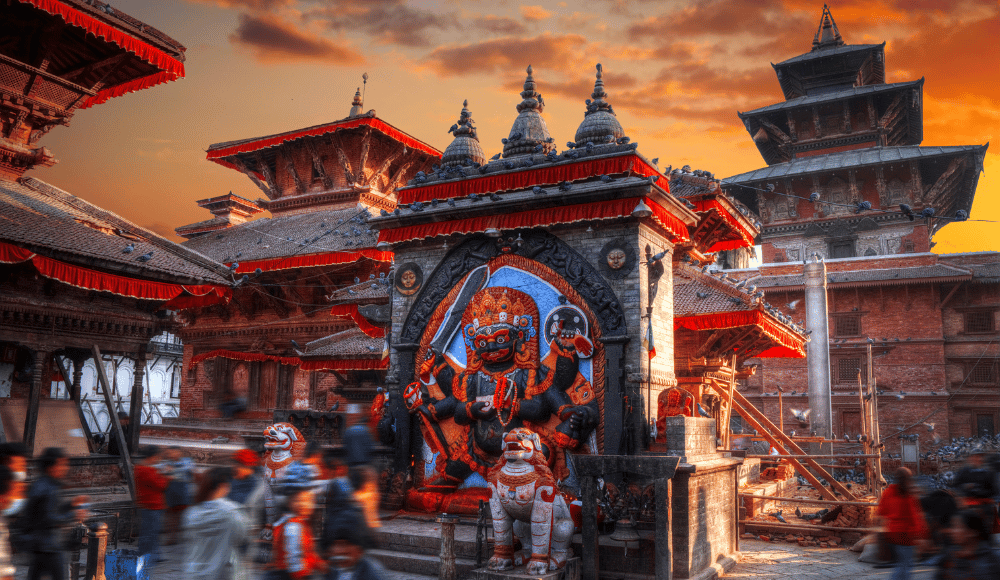
Some important monuments seen in this area are: (i) The Taleju temple is the tallest of all structures built by King Mahendra Malla in 1549 A.D. (ii) The Jagannath temple, built in the 16th century, is known for the fascinating erotic figures carved in the wooden struts. (iii) The Kala Bhairav, one of the largest 17th-century stone statues in Kathmandu, represents the terrifying aspect of Shiva. (v) The 17th century Kumari temple (the temple of the living goddess is an example of the highly developed Nepali craftsmanship. (vi) Kastamandap, from which
5. The Pashupati Nath Temple:
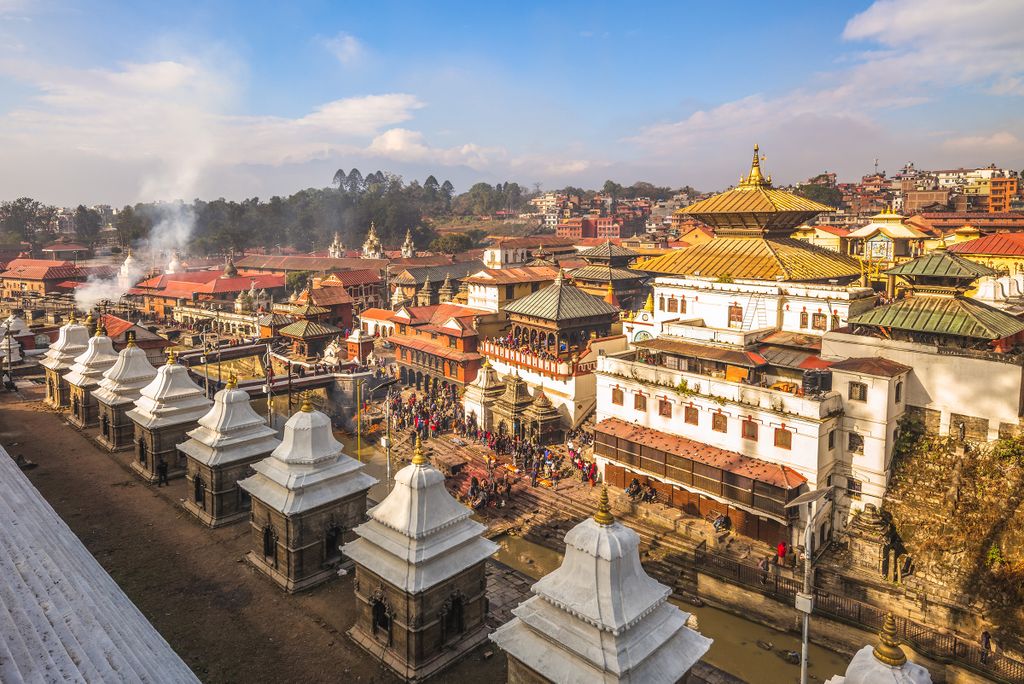
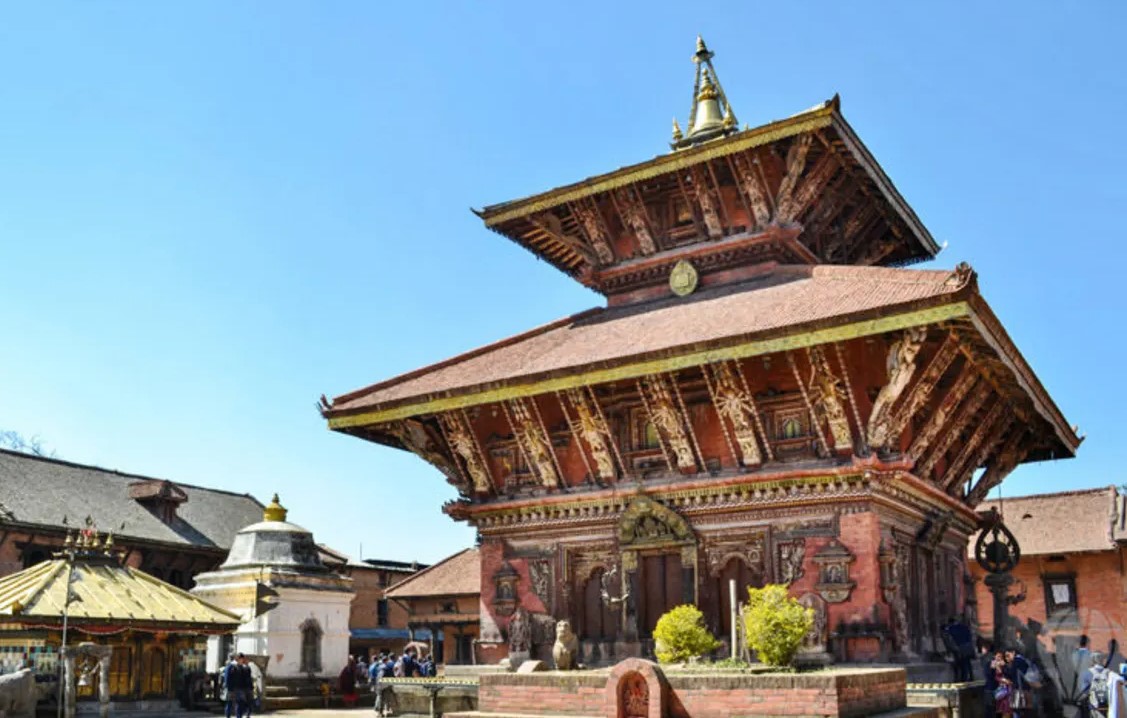
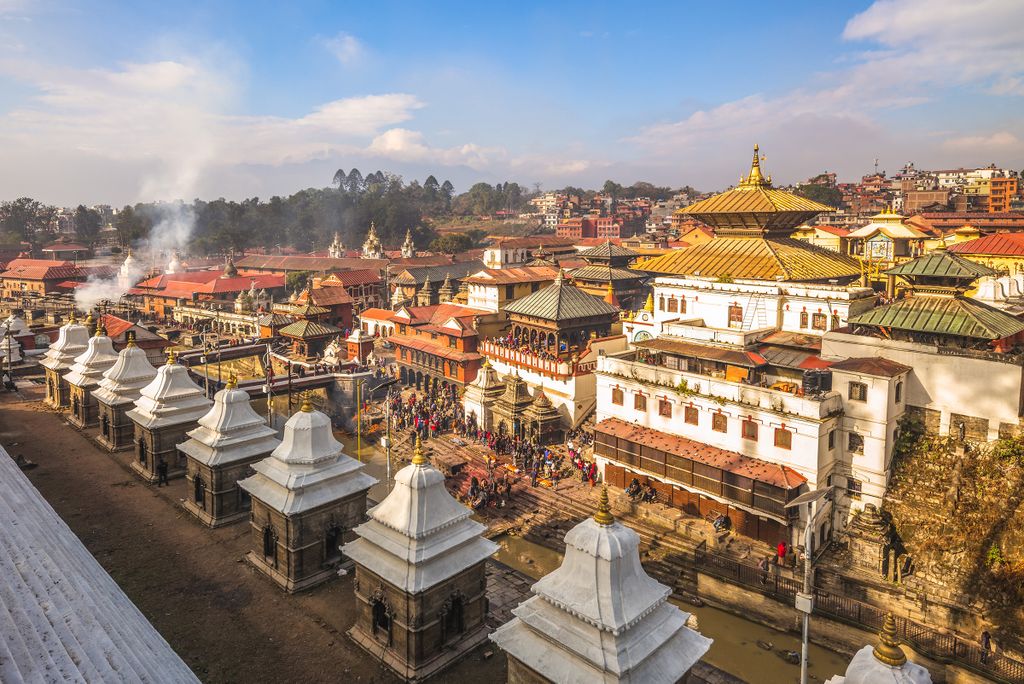
Located on the banks of the sacred Bagmati River in Kathmandu, Nepal, it is one of the most significant Hindu temples dedicated to Lord Shiva. A UNESCO World Heritage Site, the temple’s origins date back centuries, with its current form believed to have been constructed in the 5th century. The temple is renowned for its awe-inspiring pagoda-style architecture, gilded roofs, intricate wood carvings, and a massive stone lingam inside the sanctum. It is surrounded by numerous smaller temples, ashrams, and statues that add to its spiritual allure.
The temple is not only a place of worship but also a hub of cultural and spiritual significance, attracting pilgrims, sadhus (holy men), and tourists from around the world. The site is particularly vibrant during the annual Maha Shivaratri festival, when thousands of devotees gather to offer prayers and celebrate. The adjacent ghats along the Bagmati River serve as an important site for Hindu cremation rituals, reflecting the deeply intertwined beliefs in life, death, and the afterlife. Pashupatinath stands as a testament to Nepal’s rich heritage and unwavering devotion.is a World Heritage Site of Nepal, as enlisted by UNESCO, and stands as a symbol of unity and has a rare unifying force that it exerts among people of the region. This is the holiest of all Shiva shrines in Nepal and is the world’s most important pilgrimage for Hindus. The word "Pashu" means living things and "Pati" means master. Lord Shiva is known by many different names, e.g., Shambhu, Bhole Baba, Shankar, Pashupati, etc.
6. Bhaktapur Durbar Square:
Bhaktapur is a very unique old town. This city was founded by King Ananda Dev in 889 A.D. Bhaktapur is said to have been built in the shape of a conch shell- a sacred symbol of Lord Vishnu. The word Bhaktapur means the city of devotees.
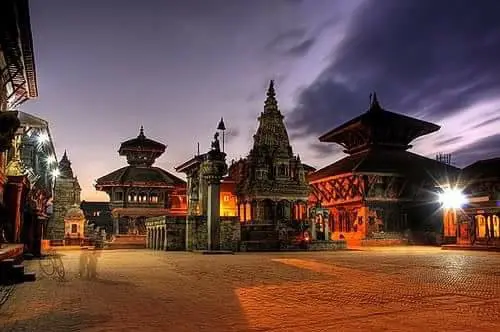
Before the unification of Nepal, Bhaktapur was an independent principality ruled by the Malla kings who were very much devoted to religion, culture, and art. During that period, many magnificent temples and mansions were built. This period is remembered as a golden period in the history of Nepalese art. There are many monuments, squares, and courtyards of historical significance. Bhaktapur, also known as Bhadgaon or the "City of Devotees," is a timeless gem located in the Kathmandu Valley of Nepal. Renowned for its exquisite Newar architecture, this ancient city is a living museum that showcases intricately carved temples, grand palaces, and traditional courtyards. Among its notable landmarks is the Nyatapola Temple, a towering five-story pagoda that stands as a masterpiece of craftsmanship and engineering. The Durbar Square, a UNESCO World Heritage Site, is the heart of Bhaktapur, featuring ornate structures like the 55-Window Palace and the Golden Gate, all of which reflect the city's glorious past.
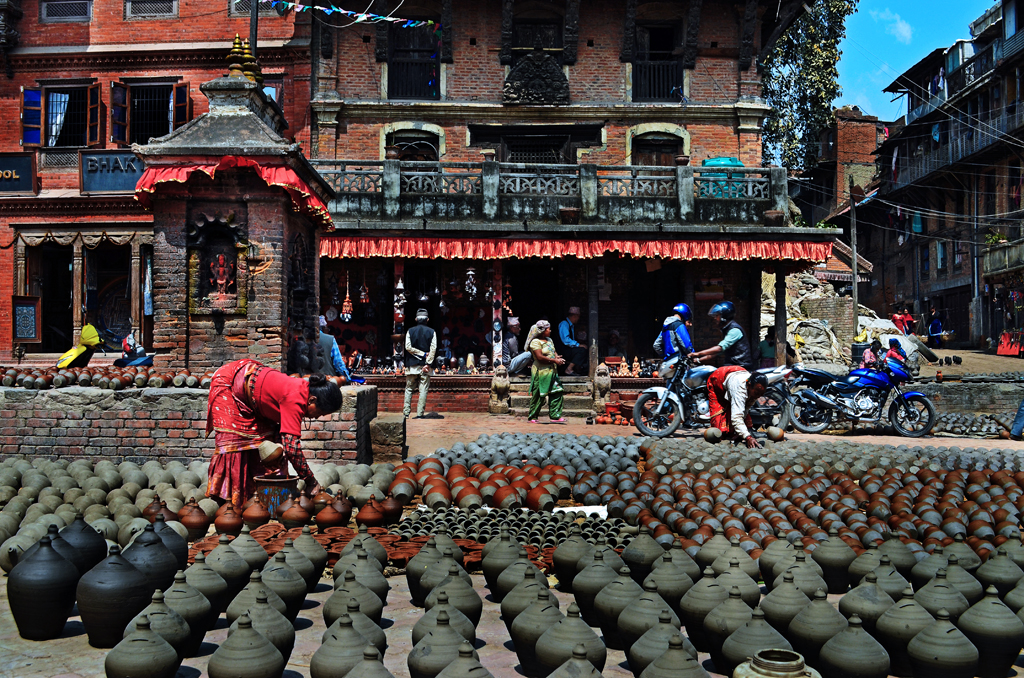
Bhaktapur is celebrated for preserving its cultural heritage and traditional way of life. The city's cobblestone streets are lined with artisans crafting pottery, wood carvings, and traditional masks, keeping centuries-old practices alive. Festivals such as Bisket Jatra, with its vibrant processions and rituals, bring the city to life, showcasing the rich cultural tapestry of Nepal. A visit to Bhaktapur offers a journey back in time, immersing visitors in its artistic splendor, spiritual essence, and authentic local culture.
Photo Gallery